
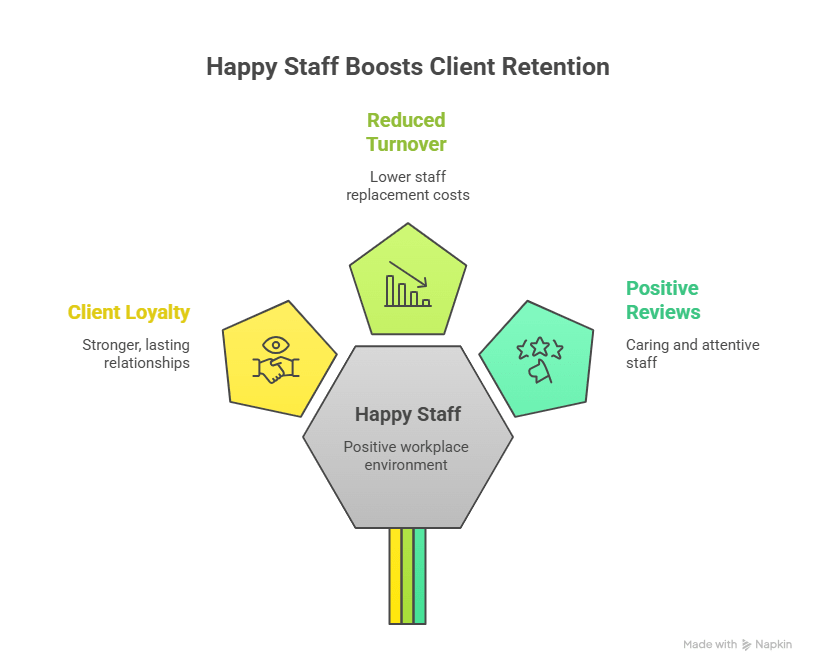
Every pet parent remembers the smile of a kind technician or the calming words of a veterinarian during a stressful moment. These interactions aren’t just “nice touches”—they form the foundation of trust. When veterinary staff feel supported and engaged, clients notice. They return, recommend the clinic, and build long-term loyalty.
When teams are exhausted or burned out, even excellent medical care can’t fully compensate. Client satisfaction softens, retention declines, and revenue pressure follows. Industry research consistently links staff wellbeing with client experience outcomes.
At PetCoverage.ai, we focus on reducing financial tension inside the exam room by helping clinics guide pet parents toward appropriate insurance coverage. When cost conversations are smoother, teams can stay focused on care, and clients feel supported throughout the visit.
The Emotional Link Between Staff and Client Loyalty
Veterinary medicine is a calling as much as a profession. Teams show up daily for animals and the relationships they’ve built with clients over time. When workloads become overwhelming and staff feel undervalued, that emotional connection can erode.
The 2024 Veterinary Wellbeing Study by Merck Animal Health, in collaboration with the American Veterinary Medical Association, examines burnout, mental health, and wellbeing across veterinarians and support teams. The study highlights how sustained workload pressure and emotional strain affect both morale and job satisfaction.
Industry studies and workforce reports indicate that higher burnout levels are associated with diminished client experience, as stressed teams have less capacity for clear communication and empathy during appointments.
Clients don’t judge loyalty by speed alone. They measure how they feel during each interaction. Supported staff create calmer environments, clearer explanations, and stronger trust.
Warning: The Hidden Cost of Staff Turnover
Staff turnover is more than a morale issue—it’s a measurable financial risk.
Replacing a veterinary technician typically costs 20–30% of annual salary, according to industry HR benchmarking for healthcare and veterinary practices. These costs reflect recruiting, onboarding, training time, and lost productivity.
Workforce benchmarking and practice management reports also indicate that clinics experiencing frequent staff turnover can see a 10–15% decline in client retention, particularly when long-standing client–staff relationships are disrupted.
Pet parents notice when familiar faces disappear. Confidence weakens when continuity of care feels uncertain.
PetCoverage.ai note: By helping clinics reduce payment friction and unpaid invoices, insurance guidance can ease emotional strain on staff during cost discussions, supporting more consistent, relationship-driven care.
Veterinary Staff Appreciation: More Than Pizza Parties
Staff appreciation is most effective when it’s built into daily operations, not limited to occasional gestures. Sustainable appreciation means creating an environment where teams feel heard, supported, and respected.
Effective approaches include:
Transparent communication about clinic goals and operational challenges
Regular feedback that recognizes contributions and addresses concerns early
Wellness support that acknowledges emotional demands of the role
Financial relief tools, such as proactive insurance education, to reduce tense cost conversations
When employees feel valued, they invest more fully in the clinic’s success—and clients feel that stability at every touchpoint.
Smarter Veterinary Staff Training: Building Skills and Confidence
Training supports more than technical proficiency. It builds confidence in both clinical and client-facing situations.
Strong training programs commonly include:
Cross-training, allowing flexibility without added stress
Client communication skills, improving clarity and trust
Scenario-based problem solving, especially around emergencies and cost conversations
Training strengthens morale by preparing teams for real-world challenges.
At PetCoverage.ai, we’ve seen that when financial tension is reduced through insurance readiness, training becomes more effective. Teams can focus on communication quality and care delivery instead of navigating payment disputes.
How to Improve Veterinary Staff Retention
Retention is driven by culture as much as compensation. Clinics that keep great people focus on long-term support rather than constant hiring.
Key strategies include:
Clear career pathways that show room for growth
Work-life balance initiatives that reduce burnout risk
A culture of respect, valuing every role in the practice
Reduced financial stress, minimizing emotional fatigue tied to billing issues
When clinics ask, “How can I staff my veterinary clinic?” the answer often lies in keeping experienced, trusted team members engaged and supported.
Case Study: How Staff Happiness Boosted Client Retention
A mid-sized veterinary clinic in Texas addressed rising burnout and client complaints linked to staff turnover and cost-related tension.
After implementing structured training, wellness initiatives, and proactive pet insurance education:
Client retention increased by 17% within one year
Staff turnover decreased by 12%
Client reviews increasingly cited “knowledgeable and compassionate staff”
These outcomes align with broader workforce and client-experience benchmarking across veterinary practices.
Frequently Asked Questions (FAQs)
1. What’s the fastest way to improve veterinary staff morale?
Consistent appreciation and open communication. Small, regular recognition often matters more than occasional large gestures.
2. Does client insurance really affect staff happiness?
Industry experience suggests yes. When clients are financially prepared, staff face fewer high-stress cost conversations.
3. How can small clinics compete with larger hospitals for staff?
Culture matters. Flexible schedules, respect, and strong client relationships often outweigh higher salaries alone.
Key Takeaways
In wrapping up our look at veterinary staff and client retention, one message is undeniable: happy teams build loyal clients. Here’s what matters most:
Prioritize Veterinary Staff Appreciation – Recognizing your team improves morale and translates into better client experiences.
Invest in Veterinary Staff Training – Ongoing learning keeps employees motivated, skilled, and less likely to leave.
Strengthen Retention Efforts – Supporting staff well-being creates stability that clients notice and value.
We’ve explored how focusing on your people directly impacts client trust, satisfaction, and loyalty.
For more insights and the latest veterinary staff news and strategies, follow PetCoverage.ai on Facebook, Instagram, TikTok, and LinkedIn.
Want to reduce stress for both your staff and your clients? Guide pet owners to PetCoverage.ai today.