
When you look at your cat curled up on the couch or hear their soft purr against your chest, you probably feel the same thing most cat parents feel — love, safety, and a quiet promise that you’ll always protect them. That’s why even simple decisions, like the cost to spay a cat, can feel overwhelming. You’re not just comparing prices. You’re trying to choose the safest path for a tiny life that depends on you.
At PetCoverage.ai, we understand that responsibility more than anyone. We’re here because too many pet parents get surprised by vet bills they didn’t expect. Procedures like spaying may seem simple, but a sudden complication, an unexpected exam fee, or a hidden cost can turn a routine visit into a stressful one. Our platform gives you instant access to real insurance quotes, clear comparisons, and honest policy reviews. If you already have insurance, you can upload your plan and we’ll scan it for hidden exclusions, waiting periods, and rising premium risks — all to make sure you’re truly protected from financial surprises.
That’s why talking about spay costs matters. It’s not just a number. It’s about giving your cat a healthier, safer life without putting yourself under financial strain. And today, we’re going to break down exactly how much it costs to spay a cat, what affects the price, and why delaying this procedure can cost far more — in money and in heartache.
Understanding the True Cost to Spay a Cat
Most people start with the same simple question: How much does it cost to spay a cat? The average price ranges from $150 to $500, depending on where you live and what your cat needs. According to the ASPCA, spay and neuter costs vary widely based on location, type of clinic, and the level of medical care provided, with many pet parents paying between $150 and $300 depending on services included.
The cost is much higher in some cities. For example, in Colorado and other high-cost regions, spay procedures often run closer to the top of that range because vet care has risen by nearly 60% over the past decade. A low-cost clinic might charge $50–$100, but a full-service vet clinic may include pre-surgical bloodwork, pain medication, monitoring, and advanced anesthesia equipment that raise the price. Emergency hospitals or clinics in high-demand areas may charge even more. Even though the price varies, the goal is always the same: keeping your cat safe.
Many pet parents don’t realize that spaying a cat isn’t just about preventing pregnancy. It also dramatically reduces certain health risks, like infections and some cancers. That’s one of the reasons vets urge spaying before the first heat cycle. But cost is still a real concern. And if your cat develops a complication or a hidden health issue is discovered during pre-op testing, bills can grow quickly.
What Affects the Cost to Spay a Cat?
The price of spaying a cat depends on more than just the surgery itself. Here are the biggest factors:
1. Your Location
Urban and high-cost regions charge more because rent, wages, and equipment are all more expensive. Cities like Denver, Seattle, Austin, and San Francisco typically have higher spay prices than rural or suburban areas.
2. Type of Clinic
Low-cost clinics or mobile clinics offer basic spay surgeries at reduced rates. Private full-service vets cost more because they include more monitoring and safety precautions.
3. Your Cat’s Age and Health
Older cats, overweight cats, or cats in heat sometimes require more anesthesia, time, or care. That adds to the final bill.
4. Pre-Op Requirements
Many vets require pre-surgical exams or blood tests. These tests help keep your cat safe during anesthesia, but they also add $40–$150 to the total cost.
5. Pain Medication & Aftercare
Most clinics include pain medication in the price, but some charge separately. Your cat may also need a cone, antibiotics, or follow-up visits if complications appear.
6. Additional Services
Some vets bundle microchipping, vaccines, or exams into one package. Others charge a la carte. Bundles can save money — but only if you understand what’s actually included.
This is where PetCoverage.ai helps you stay ahead. If a complication arises, or if your vet finds a condition you didn't expect, having the right insurance keeps these extra charges from becoming overwhelming.
Case Study: A Cat Owner Faced a $900 Bill — Until Insurance Saved the Day
In 2024, a cat named Nyx was brought in for a simple $180 spay appointment. But during the pre-surgery exam, the vet found she had an undiagnosed heart murmur. She needed additional blood work, X-rays, and a special anesthesia plan. The total bill jumped to over $900. Nyx’s vet later told NBC Los Angeles that this kind of price jump isn’t rare at all — especially for city clinics.
Her owner Gian Paul, had recently reviewed her insurance through PetCoverage.ai and switched to a plan that covered diagnostic testing and complications. Her insurer reimbursed 80% of the additional costs, saving her over $600.
This is the kind of situation we see all the time. Many pet parents don’t expect complications, so they don’t think the cost to spay a cat could ever exceed the base price. But vet care is unpredictable. And whether it’s bloodwork, specialized anesthesia, or a surprise condition, the right insurance can make the unexpected manageable.
At PetCoverage.ai, we help cat parents compare plans and review policies so situations like Willow’s don’t turn into financial emergencies.
Why Spaying Matters — Beyond the Price Tag
Spaying is more than a routine procedure. It protects your cat from serious risks. When cats aren’t spayed, they can develop infections like pyometra, which can cost thousands to treat. They also go into heat cycles that cause stress, loud vocalizing, attempts to escape, and unwanted pregnancies.
A single pregnancy can cost far more than the spay itself. Food, exams, complications, emergency delivery — it all adds up. And untreated health problems can cost even more. Some cat parents don’t realize that spaying early can add years to a cat’s life.
Still, the financial side can feel heavy, especially when you don't know what to expect. That’s why PetCoverage.ai encourages pet parents to understand all parts of the process and plan ahead. You deserve to make decisions with clarity, not fear.
The Most Overlooked Cost of Delaying Spay Surgery
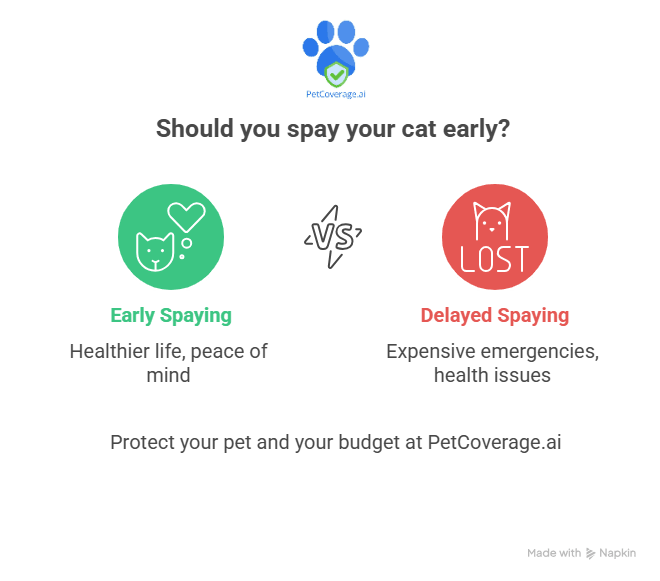
The biggest financial risk isn’t the surgery itself — it’s waiting too long.
When a cat goes into heat, the surgery becomes more complex. There’s more blood flow, more swelling, and a higher risk of complications. That can raise the cost by $50–$150 instantly.
Worse, female cats who aren’t spayed early face much higher risks of infections and cancers. Treating these issues can cost $1,500–$6,000 — and that doesn’t include follow-up visits or medications.
Many cat parents wait because they’re hoping to save money, only to face a much bigger bill later. Delaying almost always costs more.
PetCoverage.ai helps ensure you’re not caught off guard. If your cat ever needs emergency care, diagnostic testing, or ongoing medication, the right insurance plan keeps you protected.
How to Save Money on Spay Costs Without Cutting Corners
You can protect your cat and your wallet at the same time. Here’s how:
1. Look for Low-Cost Clinics
Many shelters and nonprofits offer spay programs for significantly lower prices.
2. Choose Wellness Packages
Vets often offer bundles that include vaccines, exams, and spaying together for less.
3. Avoid Emergency Clinics
Unless it’s urgent, don’t schedule surgeries at emergency hospitals. Their costs can double.
4. Get Insurance Before Surgery
You can’t insure a condition after it appears. If complications arise, insurance can cover diagnostics and aftercare.
5. Compare Plans at PetCoverage.ai
Instead of guessing which insurer is best, we show you your options side by side — clearly, quickly, and without fine-print surprises.

Frequently Asked Questions (FAQs)
1. Is spaying painful for cats?
Cats are under anesthesia during the surgery, and most vets provide pain medication. Recovery is usually quick and easy.
2. How long does a cat need to recover after being spayed?
Most cats recover within a week. Keep them indoors, quiet, and prevent jumping while the incision heals.
3. Does pet insurance cover spay surgery?
Most accident-and-illness plans do not cover routine spays, but some wellness add-ons do. Insurance can still help with complications or aftercare costs.
Key Takeaways
Spaying your cat is more than a routine surgery — it’s a choice that protects their health and prevents future stress for both of you. Here’s a quick summary:
Keep it timely: Spaying early lowers risks, reduces costs, and helps your cat avoid painful complications.
Watch recovery closely: Any swelling, redness, or unusual behavior means your cat needs attention right away.
Plan ahead financially: Vet bills can climb fast if complications happen. PetCoverage.ai helps you compare plans so your cat’s care is always affordable and stress-free.
Your cat counts on you to keep them safe. With the right insurance, you can focus on their healing and comfort — not the cost.
Follow PetCoverage.ai on Facebook, Instagram, TikTok, and LinkedIn for more pet health tips, smart care guides, and helpful resources.
y