
Managing a veterinary business is often a balancing act. One moment you’re helping a frightened dog feel safe; the next, you’re navigating payroll, supply costs, or delayed payments. Many veterinarians enter the profession driven by care and compassion, only to encounter rising operating costs, staffing pressure, and payment friction that affect even well-run clinics.
At PetCoverage.ai, we see how affordability challenges and delayed payments create financial strain for veterinary practices. By helping pet parents secure appropriate insurance coverage, we help reduce financial friction at the point of care, supporting steadier revenue while allowing clinics to focus on patients.
If you’ve been wondering how to increase veterinary business growth, how to start a veterinary business, or how to build a sustainable veterinary clinic business without sacrificing patient care, this guide outlines the key financial pressures — and opportunities — practices face in 2025.
guide will show you the key challenges, and the opportunities, veterinary practices face in 2025.
Starting Strong: Why Business Management Matters from Day One
For anyone exploring how to start a veterinary business or how to start a veterinary clinic business, success depends on more than opening the doors. Payroll systems, staffing plans, supply management, and revenue cycle processes must be established early.
New clinics often face pressure from rising costs, staffing shortages, and inconsistent cash flow during their early years. By building clear financial and operational systems from the outset, practices create a stronger foundation for long-term stability and growth.
The Emotional Side of Managing a Veterinary Business
Veterinary medicine is more than a career — it’s a calling. Yet many clinic owners find themselves pulled into administrative and financial concerns alongside patient care.
According to a 2023 report from the American Veterinary Medical Association (AVMA), nearly 25% of veterinary practices experience cash flow challenges, even when appointment demand remains strong.
These pressures are often driven by increasing expenses, delayed payments, and staffing constraints rather than a lack of commitment or competence. Veterinary business management helps bridge this gap by creating systems that support both financial stability and team wellbeing.
Smarter Staff Management: Balancing Care and Costs
Your team is your greatest asset — and also your largest expense.
Industry benchmarks from the Veterinary Hospital Managers Association (VHMA) and Veterinary Economics indicate that staff costs typically account for 45–55% of total clinic revenue.
When staffing costs rise alongside overtime and turnover, margins can tighten quickly.
Strategies that support balance include:
Scheduling staff around demand to limit overtime
Cross-training team members for flexibility
Incentivising efficiency while maintaining care standards
Burnout is a hidden cost that doesn’t appear on balance sheets. Fatigue and turnover increase recruitment and training expenses while affecting continuity of care.
Why coverage matters here: When clients have insurance, financial discussions are clearer and less stressful. Staff spend less time navigating payment concerns and more time focused on care.
Supplies, Labs, and Overhead: Controlling the Silent Drain
Medical supplies, diagnostics, and equipment typically consume 20–25% of clinic revenue, according to AVMA and Veterinary Economics benchmarks.
Common cost pressures include:
Overstocked inventory that expires
Emergency purchasing at higher prices
Variable laboratory fees
In addition, fixed overhead such as rent, utilities, and administrative systems generally represents 15–20% of revenue, based on VHMA financial benchmarks. These costs remain stable even when patient volume fluctuates.
When clients can afford recommended care, clinics are better positioned to generate consistent income to cover these fixed expenses.
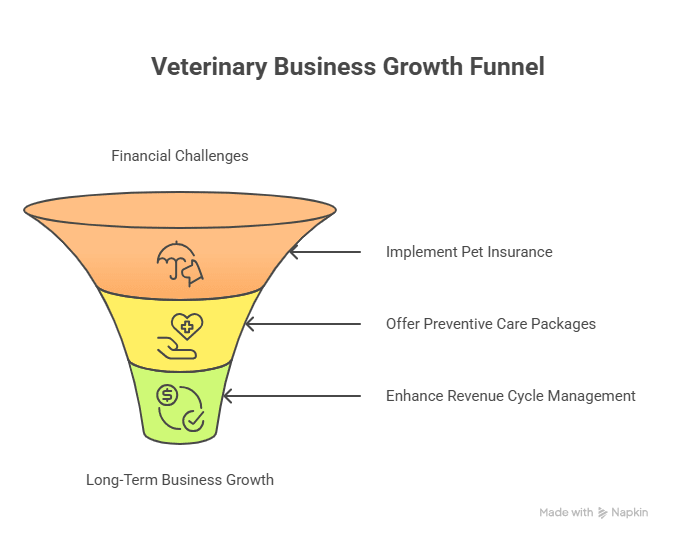
Revenue Cycle Management: The Hidden Key to Growth
Many clinics lose 5–8% of annual revenue to delayed payments, missed charges, or unpaid invoices. For a practice earning $1M, that’s $50,000–$80,000 gone each year.
The biggest challenge? Pet parents who want care but can’t afford it, leaving clinics unpaid after delivering treatment.
Where insurance helps: When pet owners are covered, bills are more likely to be paid on time. Clinics can approve treatment plans faster, avoid awkward money conversations, and reduce revenue leakage.
Case Study: Insurance Driving Better Outcomes
A 2024 NAPHIA study found that insured pet parents were three times more likely to approve advanced treatments than those without insurance.
For clinics, higher approval rates are associated with:
Improved adherence to treatment recommendations
Fewer unpaid or partially paid invoices
More predictable cash flow
At PetCoverage.ai, we see this consistently. When pet parents are financially prepared, veterinarians can recommend appropriate care without hesitation, improving outcomes for pets and operational stability for practices.
How to Increase Veterinary Business Growth
Sustainable growth in veterinary business management is rarely about adding more services. It often comes from strengthening existing systems.
Effective approaches in 2025 include:
Insurance education: Prepared clients are less likely to delay care
Preventive care programs: Support predictable revenue streams
Stronger client relationships: Follow-ups and education build loyalty
Quarterly financial reviews: Identify pressure points early
Reducing unpaid invoices: Early insurance conversations protect cash flow
Together, these steps help practices grow without increasing workload stress on teams.

Frequently Asked Questions (FAQs)
1. How does pet insurance affect veterinary business management?
Industry data shows that insurance reduces unpaid invoices and improves treatment acceptance, supporting more consistent revenue.
2. Is veterinary business still profitable in 2025?
Yes, though profitability depends on managing rising costs, staffing pressures, and payment delays effectively.
3. What is the biggest financial challenge facing clinics today?
Staff shortages combined with revenue lost to delayed or unpaid invoices.
4. Can small clinics compete with larger hospital groups?
Yes. Personalised care paired with financial preparedness can strengthen client loyalty.
5. What is one practical way to improve revenue quickly?
Encouraging insurance readiness among clients improves treatment approval and cash flow.
Key Takeaways
Veterinary business management in 2025 is shaped by rising expenses, staffing pressure, and payment friction — not by a lack of dedication or expertise.
Protect cash flow: Insurance reduces revenue lost to unpaid invoices
Support staff wellbeing: Fewer payment disputes allow teams to focus on patients
Grow through prepared clients: Insured pet parents approve care more consistently
By aligning compassionate care with financial preparedness, clinics can build resilience and long-term growth.
For more insights and the latest veterinary business news, follow PetCoverage.ai on Facebook, Instagram, TikTok, and LinkedIn.
Want to strengthen your clinic’s future? Guide your clients to PetCoverage.ai today and reduce financial stress for both families and your business.