
Pet owners are spending more on pets than ever in 2025. From preventive checkups to advanced diagnostics and surgery, families increasingly expect high-quality veterinary care. At the same time, many veterinary businesses are under growing strain. Rising operating costs, workforce constraints, and client affordability gaps are placing sustained financial pressure on clinics across the industry.
At PetCoverage.ai, we focus on reducing financial friction between pet parents and clinics so veterinarians can stay focused on care delivery rather than payment uncertainty. Understanding today’s challenges—and the opportunities embedded within them—is critical for practices navigating 2025.
Below is a clear, data-grounded look at the most significant veterinary business challenges this year.
Challenge 1: Rising Costs of Veterinary Care
Veterinary operating expenses continue to climb. Industry benchmarking from veterinary associations and practice management studies consistently shows that staff compensation represents approximately 45–55% of clinic revenue, while medical supplies, diagnostics, and equipment account for roughly 20–25%. With fixed overhead layered on top, many practices report net profit margins below 10%.
These benchmarks are reflected in financial analyses published by organizations such as the American Veterinary Medical Association, Veterinary Hospital Managers Association, and long-running practice finance research referenced by Veterinary Economics.
The Opportunity:
Improve inventory controls to reduce waste and spoilage
Review supplier contracts and purchasing strategies
Support client affordability through insurance preparedness, helping stabilize revenue without increasing financial strain on pet owners
Challenge 2: Staffing Shortages and Burnout
Veterinary workforce constraints remain one of the industry’s most pressing structural challenges. Veterinary workforce studies cited by the AVMA and related academic labor analyses project a shortfall of approximately 15,000 veterinarians by 2030, with capacity pressure already evident in 2025.
Clinics are responding to higher caseloads with longer hours, increased reliance on limited staff, and fewer buffers for time off. Burnout affects not only retention, but also care continuity and client experience.
The Opportunity:
Invest in staff retention and wellbeing initiatives
Use automation and workflow tools to reduce administrative load
Minimize high-stress cost discussions during treatment by working with financially prepared clients
Ignoring burnout risks accelerating turnover, disrupting care continuity, and increasing long-term hiring costs.
Challenge 3: Changing Client Expectations
Today’s pet parents expect transparency, convenience, and clarity. Digital booking, upfront pricing discussions, and flexible payment experiences are increasingly standard expectations rather than differentiators.
When affordability becomes a barrier, treatment delays or declinations increase—impacting patient outcomes and clinic sustainability. This dynamic reflects broader affordability pressures rather than client unwillingness to pursue care.
The Opportunity:
Proactively educate clients on costs and options
Pair preventive care strategies with insurance awareness to support predictable payment flows
Build long-term loyalty through compassionate, well-communicated care experiences
Meeting these expectations directly supports sustainable veterinary business growth by strengthening trust and repeat engagement.
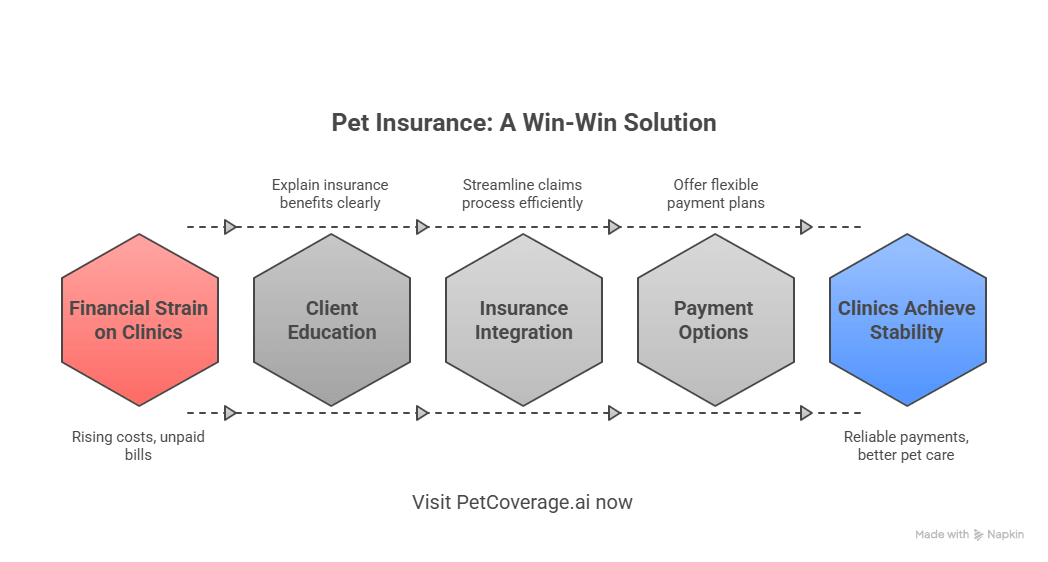
Challenge 4: Unpaid Bills and Financial Pressure
Unpaid or delayed invoices remain a measurable source of revenue leakage. Practice finance studies referenced by veterinary management organizations estimate that clinics may lose approximately 5–8% of annual revenue due to billing inefficiencies and uncollected payments.
These losses are often tied to emergency care scenarios where clients are emotionally prepared—but not financially prepared—for unexpected costs.
The Opportunity:
Encourage insurance readiness so clients can approve care without delay
Reduce financial tension between staff and pet parents during treatment decisions
Improve payment stability and long-term financial planning
At PetCoverage.ai, we’ve seen that improving client financial preparedness can reduce friction at the point of care, supporting smoother clinic operations without changing medical standards.
For those considering how to start a veterinary business, building payment readiness into the practice model is now a foundational consideration—not an add-on.
Challenge 5: Growing Competition
Veterinary competition continues to diversify. Independent clinics now operate alongside corporate groups, mobile providers, and telehealth platforms. This environment places pressure on pricing, convenience, and perceived value.
The Opportunity:
Emphasize personalized care and long-standing community trust
Position financial preparedness as part of the client experience
Strengthen retention through education, follow-ups, and preventive care continuity
Smaller practices can remain competitive by aligning clinical excellence with consistent, client-friendly financial pathways.
Case Study: How Insurance Supported Business Growth
Data published by the North American Pet Health Insurance Association (NAPHIA)shows that insured pet parents are approximately three times more likely to approve recommended treatments compared to uninsured clients.
For clinics, this correlation supports:
Higher treatment compliance
Fewer delayed or unpaid balances
More predictable revenue and improved patient outcomes
At PetCoverage.ai, our experience working with clinics reflects this broader industry data: financially prepared clients are more confident decision-makers, which benefits care teams and patients alike.
Looking Ahead: Opportunities for Veterinary Businesses in 2025
Despite ongoing pressures, 2025 presents meaningful opportunities for practices that adapt proactively.
Key Focus Areas:
Financial preparedness: Educated, insured clients support payment stability
Preventive care alignment: Predictable care models strengthen cash flow
Client loyalty: Transparency and empathy drive retention
Operational efficiency: Smarter systems reduce avoidable revenue loss
For new and established clinics alike, these strategies help balance rising costs with long-term resilience.

Frequently Asked Questions (FAQs)
1. Why are veterinary businesses under pressure despite higher pet spending?
Rising expenses, workforce constraints, and unpaid balances often offset revenue growth.
2. How does pet insurance support clinics operationally?
It improves treatment approval rates, reduces unpaid invoices, and stabilizes payment flows.
3. What is the most pressing challenge in 2025?
Workforce shortages combined with sustained cost inflation.
4. Can independent clinics still compete?
Yes—through personalized care, strong community relationships, and financial readiness.
5. What is the most immediate operational improvement clinics can make?
Supporting client financial preparedness before emergencies occur.
Key Takeaways
In wrapping up our look at the veterinary business in 2025, one thing is clear: challenges like rising costs, staff shortages, and unpaid bills will define the year, but they also create opportunities for smarter, stronger practices. Here are three focused takeaways:
Strengthen Financial Stability: Rising expenses and unpaid bills hurt margins. Encouraging pet insurance helps clinics secure predictable revenue.
Support Teams Under Pressure: Staffing shortages and burnout are real. Smarter systems and financially prepared clients ease the strain on veterinary staff.
Build Client Loyalty Through Preparedness: Pet parents with coverage approve more treatments, trust the clinic more, and return for preventive care.
We’ve explored how 2025 challenges can become opportunities when paired with financial readiness.
For more insights and tools to keep your clinic thriving, follow PetCoverage.ai on Facebook, Instagram, TikTok, and LinkedIn.
Ready to reduce unpaid bills and grow your practice? Guide your clients to PetCoverage.ai today.