
This article is for informational purposes only and is not a substitute for professional veterinary advice.
Imagine your dog watching you sip a glass of milk, tail wagging with hopeful eyes. It’s a familiar moment for many dog parents—and a reasonable question follows: can dogs have milk safely?
At PetCoverage.ai, we help pet owners navigate everyday decisions that affect long-term health. Feeding questions, especially around treats like milk, often come up because the answer isn’t the same for every dog. This guide explains how milk affects digestion, which options may be better tolerated, and when it’s best to avoid milk altogether.
Why Dogs May Love Milk – But Should They?
Milk smells appealing and contains fat and protein, which many dogs find irresistible. However, veterinary experts note that most dogs become less able to digest milk as they age.
According to PetMD, dogs are born with the enzyme lactase, which helps digest their mother’s milk. As dogs mature, lactase production often declines, making it harder to break down lactose—the natural sugar in milk.
The Merck Veterinary Manual explains that this loss of lactase is common in adult dogs and is the primary reason milk can cause digestive upset later in life.
Puppies: Can digest milk from their mother or a formulated puppy milk replacer
Adult dogs: Many develop lactose intolerance to varying degrees
Senior dogs: May be more sensitive due to slower digestion and underlying conditions
Because tolerance varies, veterinarians generally recommend caution when offering milk as a treat.
Digestive Risks of Feeding Milk to Dogs
Milk intolerance doesn’t affect all dogs the same way, but digestive symptoms are common in those that lack sufficient lactase.
Veterinary sources such as AKC note that signs of lactose intolerance in dogs may include:
Diarrhea
Gas or bloating
Abdominal discomfort
Occasional vomiting
Milk also contains fat and calories, which can contribute to unwanted weight gain if offered frequently. The AVMA advises that treats—especially calorie-dense ones—should make up only a small portion of a dog’s overall diet.
When to contact your veterinarian
Seek veterinary care if your dog experiences:
Persistent vomiting or diarrhea
Blood in the stool
Severe lethargy or refusal to eat
Milk Allergies vs. Lactose Intolerance
It’s important to distinguish between the two:
Lactose intolerance is relatively common and affects digestion
True milk allergies (immune-mediated reactions) are uncommon in dogs
Allergic reactions may include itching, hives, or facial swelling, but these occur far less frequently than digestive intolerance. Most dogs who react poorly to milk are intolerant—not allergic.
Milk as a Dog Treat: Safer Options
Not all dairy products affect dogs equally. Veterinarians generally recommend choosing options with lower lactose and offering them only occasionally.
Options that may be better tolerated
Lactose-free milk: Removes most lactose but still contains calories
Goat’s milk: Naturally lower in lactose than cow’s milk
Commercial dog milk products: Formulated specifically for canine digestion
Portion guidance (general starting point)
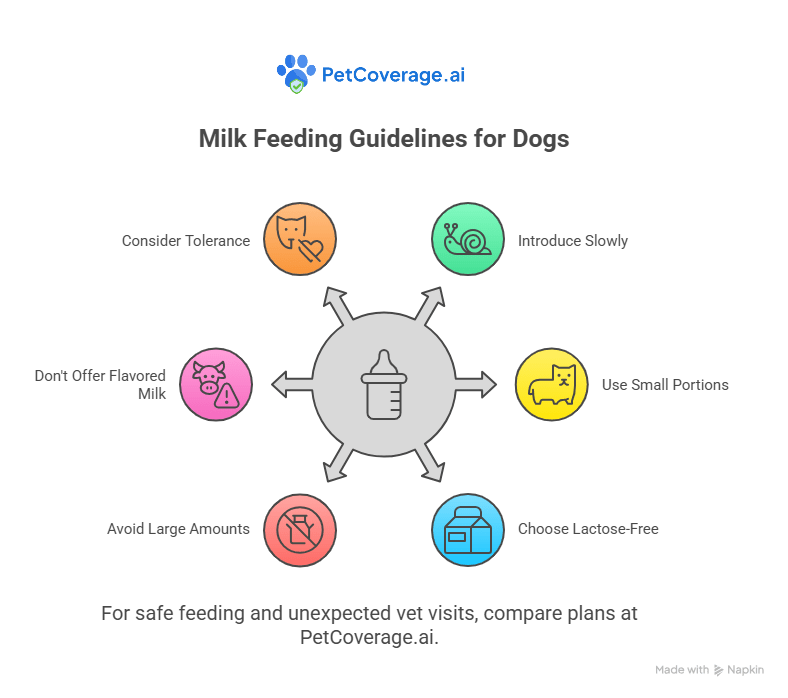
Veterinarians may suggest beginning with a very small amount (such as a teaspoon or two) for larger dogs, and even less for small dogs. Tolerance varies widely depending on size, age, and digestive health.
Rather than fixed rules, your veterinarian may advise:
Mixing milk into food instead of offering it alone
Offering it infrequently, not daily
Monitoring stools and behavior for 24 hours
Milk should never replace balanced dog food or become a dietary staple.
Creative Ways to Offer Milk-Inspired Treats
If your dog tolerates dairy well, small amounts can be used creatively:
Frozen treats: Lactose-free milk blended with dog-safe peanut butter
Kibble topper: A light splash mixed into meals
Smooth blends: Goat’s milk with dog-safe fruits
These approaches help with portion control while keeping treats occasional.
Signs Your Dog May Not Tolerate Milk Well
Even with careful introduction, discontinue milk if you notice:
Loose stools or diarrhea
Excessive gas or bloating
Lethargy after consumption
If symptoms persist, your veterinarian can help determine whether dairy should be avoided entirely.
Where Pet Insurance Fits In
Digestive upset from food reactions is a common reason for unexpected vet visits. While careful feeding reduces risk, pet insurance can help manage costs if diagnostic testing or treatment is needed—allowing you to focus on your dog’s comfort rather than financial stress.

Frequently Asked Questions (FAQs)
1. Can puppies have cow’s milk?
Veterinarians generally recommend puppy-specific milk replacers instead of cow’s milk, which can cause digestive upset.
2. Can lactose-free milk be a daily treat?
Most vets advise keeping milk occasional rather than daily, even when lactose-free.
3. Is goat’s milk better than cow’s milk for dogs?
It’s often easier to digest due to lower lactose levels, but moderation still matters.
4. Can milk cause obesity in dogs?
Yes. Milk adds calories and fat, so portions should remain small and infrequent.
Key Takeaways
Even a simple treat like a splash of milk can reveal a lot about your dog’s tolerance and health. Here’s a quick recap:
Introduce slowly: Start with tiny amounts and observe reactions.
Watch for warning signs: Vomiting, diarrhea, blood in stool, or lethargy needs immediate attention.
Protect finances: Vet visits and treatment costs can add up. PetCoverage.ai allows you to compare plans and ensure your dog’s care is always affordable.
Your dog relies on you to notice the little things. With the right pet insurance, you focus on comfort and recovery—not the bills.
Follow PetCoverage.ai on Facebook, Instagram, TikTok, and LinkedIn for more safe feeding tips, wellness insights, and helpful guides.