This article is for informational purposes only and is not a substitute for professional veterinary advice.
Many pet owners ask whether dogs can eat carrots and, if so, how much is appropriate. If your dog perks up when you snack on a carrot, you’re not alone. The reassuring news is that carrots are generally safe for dogs when fed properly and in moderation, according to veterinary nutrition guidance.
Understanding how to feed carrots to dogs safely helps you offer this crunchy snack with confidence—without increasing health risks or unexpected vet visits.
Why Carrots Are Popular Dog Treats (and When They’re Helpful)
Carrots are naturally crunchy, mildly sweet, and low in calories, which explains their popularity as a dog-friendly snack. Veterinary nutrition resources, including guidance summarized by the American Kennel Club and PetMD, note that carrots can be a suitable occasional treat for many dogs.
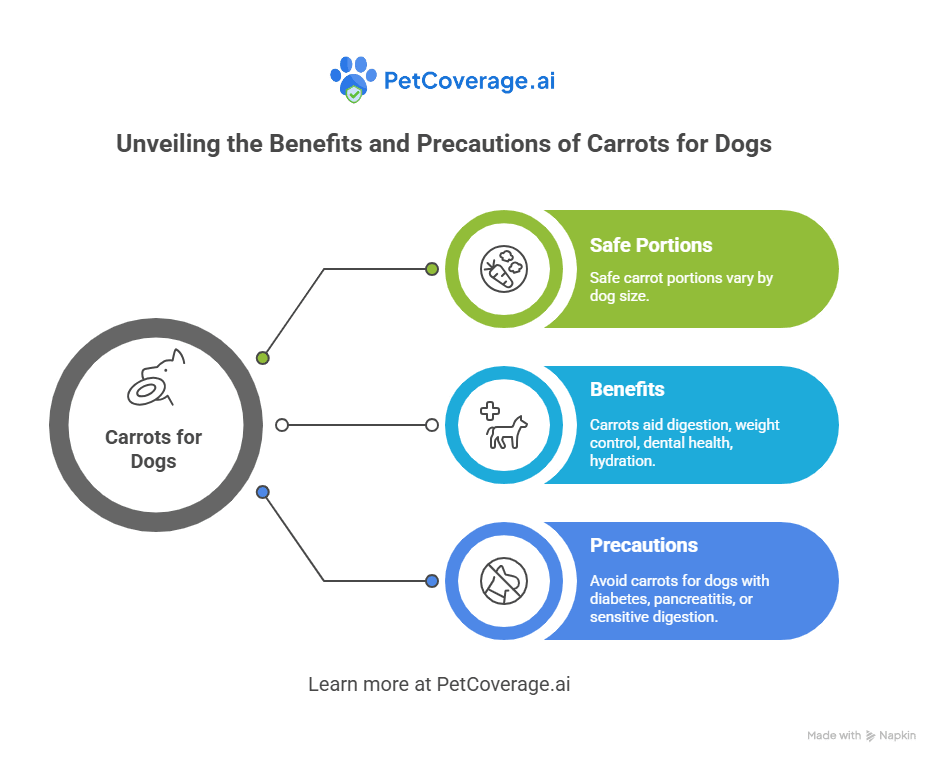
Carrots may support:
Weight management as a low-calorie alternative to commercial treats
Digestive health, thanks to dietary fiber
Dental support, by mechanically scraping soft plaque during chewing
Hydration, since carrots are approximately 88% water
General nutrition, including beta-carotene and antioxidants
This matters because weight is a common concern. Data published in the Journal of the American Veterinary Medical Association indicates that about 59% of dogs in the United States are overweight or obese, making lower-calorie treats an appealing option.
Are Carrots Safe for Dogs? Yes—with Thoughtful Portions
Dogs can eat carrots, but portion size and preparation matter.
Rather than fixed rules, veterinarians recommend flexible guidance based on your dog’s size, chewing behavior, and tolerance. In general, carrots are often tolerated in small amounts as treats—not meal replacements.
General starting guidance (not universal rules):
Small dogs: very small chopped pieces or thin slices
Medium dogs: a few bite-size pieces
Large dogs: several small chunks or sticks
Too many carrots may contribute to gas, loose stools, or blood sugar fluctuations, particularly in sensitive dogs.
How to Serve Carrots Safely
Veterinary safety guidance, including from the Merck Veterinary Manual, emphasizes preparation to reduce risk.
Best practices include:
Cut carrots into thin sticks or small cubes
Avoid whole carrots, especially for small or fast-eating dogs
Steam or soften carrots for senior dogs or those with dental issues
Freeze small pieces for teething puppies (with supervision)
Choking vs. Intestinal Blockage — What’s the Difference?
Choking risk is an immediate airway hazard when a dog tries to swallow large or hard pieces.
Intestinal blockage risk occurs when large, firm chunks are swallowed whole and become lodged in the digestive tract.
Cutting carrots appropriately helps reduce both risks.
When Carrots Require Extra Caution
Carrots are not inherently dangerous, but your veterinarian may recommend limiting or avoiding them for dogs who have:
Diabetes (due to natural sugars)
Sensitive digestion or chronic GI upset
Chewing or swallowing difficulties
A tendency to gulp food without chewing
If your dog has a medical condition, individualized guidance from your vet is always best. Professional organizations such as the Country Creek Animal Hospital consistently emphasize tailoring treats to a dog’s health history.
Illustrative Case Example: Maple’s Carrot Scare
The following story is illustrative, not typical.
In 2023, a Golden Retriever named Maple swallowed several whole raw carrots. While carrots themselves are commonly considered safe, the size and firmness of the pieces led to vomiting and abdominal discomfort. Her veterinarian monitored her closely for intestinal blockage risk, a condition discussed in veterinary literature.
With medication and observation, Maple recovered without surgery. The case highlights that preparation matters as much as food choice—and that even “safe” foods require safe handling.
Benefits of Carrots for Dogs (When Given Properly)
When fed correctly, carrots can offer:
Weight-friendly treating – low calorie compared with many commercial snacks
Dental support – crunchy texture may help reduce soft plaque
Digestive fiber – supports regular bowel movements in some dogs
Beta-carotene – contributes to eye and immune health
Hydration – high water content helps support fluid intake
Veterinary nutrition references such as PetMD note that treats—including vegetables—should make up no more than about 10% of a dog’s daily caloric intake.
How to Introduce Carrots to Your Dog
A gradual approach is best:
Start with one very small piece
Monitor for vomiting, gas, or diarrhea
Offer carrots a few times per week, not daily
Adjust portion size based on tolerance and size
Rotate preparation styles (steamed, chopped, frozen)
Frequently Asked Questions (FAQs)
1. Can dogs eat cooked carrots?
Yes. Plain cooked carrots are often easier to digest, especially for senior dogs. Avoid butter, salt, or seasonings.
2. Are baby carrots safe for dogs?
Yes, when sliced or chopped. Whole baby carrots can pose a choking risk.
3. How often can my dog eat carrots?
Many veterinarians suggest occasional treats, rather than daily feeding, to avoid excess sugar and digestive upset.
Key Takeaways
Carrots may look like a harmless snack, but how your dog reacts to them can reveal a lot about their digestion, sensitivity, and overall health. Here’s a quick recap:
Introduce slowly: Start with small, soft pieces and watch how your dog handles them.
Look for warning signs: Gas, diarrhea, choking, or sudden changes in appetite mean it's time to act fast.
Protect your budget: Food-related vet visits can get expensive. PetCoverage.ai helps you compare plans and check your coverage so your dog gets care without financial stress.
Your dog depends on you to notice the little things. With proper care, knowing can dogs eat carrots helps you offer treats confidently while avoiding surprise vet bills.
Follow PetCoverage.ai on Facebook, Instagram, TikTok, and LinkedIn for more feeding tips and pet wellness guidance.