
This article is for informational purposes only and is not a substitute for professional veterinary advice.
You’re enjoying a quiet afternoon when your dog wanders into the kitchen, tail wagging, eyes fixed on a bowl of fresh blackberries. Before sharing a bite, it’s natural to wonder whether blackberries are actually safe for dogs.
At PetCoverage.ai, we help pet parents navigate everyday decisions like feeding new foods—alongside helping them prepare financially for the unexpected. This guide explains how blackberries can fit safely into a dog’s diet, what veterinarians generally recommend, and when to be cautious.
Are Blackberries Safe for Dogs?
Yes—blackberries are generally considered safe for dogs when fed in moderation, according to guidance from the American Kennel Club and PetMD.
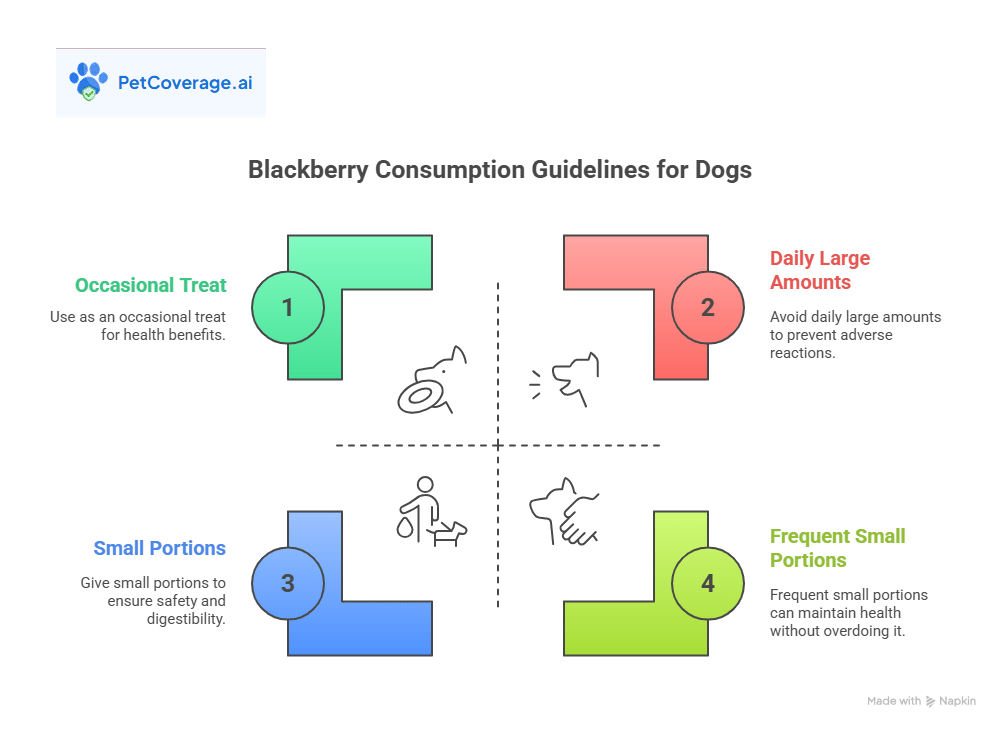
Like most fruits, blackberries should be treated as an occasional snack, not a regular part of a dog’s diet. Individual tolerance can vary depending on a dog’s size, age, and digestive sensitivity.
Nutritional Benefits of Blackberries for Dogs
When offered in small amounts, blackberries can provide several nutritional benefits:
Fiber – Supports digestive health and regular bowel movements
Antioxidants – Help reduce oxidative stress and inflammation
Vitamin C – Contributes to immune system support
Relatively low calories and sugar – Compared with many fruits
Veterinary nutrition resources such as PetMD and the Merck Veterinary Manual note that fruits may complement a balanced diet but should never replace complete dog food.
Risks of Overfeeding Blackberries
Even foods considered safe can cause problems when given in excess. Veterinarians generally caution about the following risks:
Digestive upset – Too much fiber may lead to diarrhea or loose stools
Stomach discomfort – Vomiting or gas can occur if a dog isn’t used to fruit
Choking risk – Small dogs may struggle with whole berries if not cut
Allergic reactions – Rare, but possible with any new food
The ASPCA advises introducing new foods gradually and monitoring for adverse reactions.
Symptoms That May Require Veterinary Care
Persistent vomiting or diarrhea
Blood in stool or vomit
Facial swelling, hives, or difficulty breathing
Lethargy or refusal to eat
Your veterinarian can determine whether symptoms are related to food or another underlying issue.
How Veterinarians Generally Recommend Feeding Blackberries
Veterinarians generally recommend keeping fruit treats small, infrequent, and proportionate to a dog’s size. There is no single “correct” portion, as tolerance varies from dog to dog.
Best practices include:
Washing berries thoroughly to remove pesticides
Cutting berries for small breeds to reduce choking risk
Offering only a few pieces at first
Feeding as an occasional treat rather than daily
Observing your dog for digestive or skin reactions
Your veterinarian may advise different limits based on your dog’s health history, weight, or dietary needs.
Creative and Safe Ways to Serve Blackberries
If your dog tolerates blackberries well, you can offer them in dog-friendly ways:
Frozen berries as a cooling summer snack
Mashed and mixed with plain, unsweetened yogurt
Small pieces used sparingly as training rewards
Lightly mashed and sprinkled over kibble for variety
These options help maintain portion control while keeping treats enjoyable.
Signs Your Dog May Be Sensitive or Allergic
Some dogs may not tolerate blackberries well. Watch for:
Digestive signs such as vomiting, diarrhea, or bloating
Skin reactions including itching, redness, or hives
Behavioral changes like lethargy or excessive scratching
If any of these occur, stop feeding blackberries and contact your veterinarian.
Food Safety First, Insurance Second
Careful feeding choices reduce risk, but unexpected reactions can still happen. Pet insurance doesn’t replace safe feeding practices—it simply helps reduce financial stress if a veterinary visit becomes necessary.
Illustrative example:
Laura’s Labrador experienced mild stomach upset after eating too many treats at a family picnic. A veterinary exam confirmed no serious issues. Insurance helped cover part of the visit, allowing her to focus on her dog’s comfort rather than costs.

Frequently Asked Questions (FAQs)
1. Can puppies eat blackberries?
Veterinarians generally recommend extreme moderation. Puppies have sensitive digestive systems, so only very small amounts should be offered, with close monitoring.
2. Can dogs eat blackberry stems or leaves?
No. Stems and leaves are harder to digest and may cause gastrointestinal irritation.
3. How often can I feed blackberries?
Occasionally. Your veterinarian may advise limiting fruit treats to avoid digestive upset.
4. Are blackberries safe for overweight dogs?
They may be a lower-calorie treat option, but portion control remains important.
5. Can dogs eat frozen blackberries?
Yes, as long as pieces are small enough to reduce choking risk.
Key Takeaways
Even a simple treat like a blackberry can reveal a lot about your dog’s health. Paying attention and being prepared can make all the difference. Here’s a quick recap:
Respond quickly. Digestive upset, vomiting, or unusual behavior isn’t just a minor issue; it could indicate intolerance or an allergic reaction. Early vet visits prevent bigger problems later.
Watch for warning signs. Blood in stool, persistent diarrhea, or swelling requires urgent medical attention. Ignoring these symptoms can escalate fast.
Protect your finances before emergencies. Vet visits, imaging, and treatments can get expensive. With PetCoverage.ai, you can compare plans, review coverage, and ensure your dog’s care is always within reach without financial stress.
Your dog depends on you to notice the little things. With the right pet insurance, you can focus on their comfort and recovery, not the costs.
To stay up-to-date on safe feeding tips, wellness insights, and helpful guides, follow PetCoverage.ai on Facebook, Instagram, TikTok, and LinkedIn.